- Currents
- Posts
- Mumbai Metro and time travel K Dramas
Mumbai Metro and time travel K Dramas
September 25 - ranting and loving the metro + wanting to travel in time

Sachi Mavinkurve
October 06, 2025
Hello! September’s newsletter is late, and it is long, but it is here nonetheless. Despite festive plans being rained on, quite literally, it has been a peaceful month. Music, fireworks, rain and cheer have filled the streets and it has been lovely to watch them from afar. It’s nice to know that while online worlds feel like dumpster fires the streets still feel warm and delightful.
🌊 Hi, I’m Sachi, and this is Currents, a newsletter about people, TV shows, trains, and stories. If you want to unsubscribe, the link is at the bottom. If you like this, share it with someone or say hello. Say hello, let’s chat!
Mumbai Metro & Side Quests
The perks (if you can count it a perk) of living in a city for as long as I have in Mumbai is witnessing it change over time. There’s the slow neighborhood level change in which familiar shops close, old buildings get taken down, and changes in demographic. Then there are larger city level changes like new highways, a change in prevalent styles of buildings, and in this case a functional metro system.
I’ve taken the new-ish (until recently) partly functional Aqua metro line thrice so far and quite liked it. The stations are large and spacious, waiting to be adopted widely and to be packed during peak hours. The trains are clean and honestly quite lovely. The signage informs you which exit to take if you want to go to certain places, which I found very helpful. Escalators, stairs, and elevators are available. Announcements and signage are in multiple languages. It felt fairly accessible. Each station uses different kinds of stone for their tiling. There’s still much to be done in terms of character building but it’s not a bad start. I could imagine taking the metro everyday. It gave me some reassurance that larger infrastructure can still be built into this chaotic city and some level of order can be imposed. Conditions can be made better if enough energy and funds are poured into it.
At the same time, like all (infrastructural) things Indian, there are things amiss with each project. The Aqua line has problems. The stop at the airport doesn’t quite take you inside the airport and is inconvenient. Making arrangements to take riders inside the terminal should have been a logical consideration right from conception. The stop at Bandra Kurla Complex, a commercial complex that needs better connection, is at a spot nowhere near the majority of the offices making it hard for people to actually get to work. One exit is at a spot where it’s almost impossible to cross the street. The ability to go where you need to from the station is far from ideal. A new connecting flyover in Santacruz near(ish) the airport creates a bigger bottleneck and increases traffic instead of connection. It feels like there are projects being built enthusiastically with good intentions but without thorough consideration or care. Building infrastructure without properly considering the systems it is being dropped into feels like a huge rookie error. Any garden variety urban designer and planner would have flagged this. Who is on these committees and greenlighting these decisions? (If anyone here has answers, please let me know. I really want to know. As an onlooker I can only make theories about questionable infrastructural decisions)
A research team in Japan conducted an experiment to test the efficiency of train systems in Tokyo. Slime molds are a group of microscopic single-celled organisms without brains per se that have demonstrated strong intelligence when it comes to forming efficient networks to get food. The team put slime mold in a dish shaped like the Kanto region (Tokyo is a part of this region) and placed food at major city locations and observed it. The mold spread towards the food and formed a network very similar to the railway system designed by engineers many years prior to the experiment. This means that the current train system is the most optimal way to connect the city’s most dense and active spots. I raised a petri dish of slime mold as an assignment in grad school. I chatted with my slime mold, fed it more oat than I was supposed to and ultimately killed it. The point isn’t my poor protist raising skills but the fact that the team who planned this metro line could have delegated their work to willingly unpaid slime mold. The Japanese team used light in areas with mountains, rivers, and the ocean to deter the slime mold from spreading their networks there. Slime mold does not like light as much as they like oats. Considerations could have been made for areas where the metro line could not have realistically been built. It would have been a very feasible experiment to run.
It feels like a sad and avoidable problem. The metro stations themselves can be hard to get to. Transport to and from the station has not been thought of. Some spots actually discourage rickshaws to drive all the way there. How great would it have been if they’d considered the entire journey from someone getting to the station, to buying the ticket to actually taking the train?
Mumbai is a patchwork city. Built interventions are constructed and repaired in a piecemeal manner. Whatever doesn’t work, in this case the area around an actual metro station, will be fixed in its own haphazard way in a few months or years. New informal infrastructure will mushroom around it. That’s the kind of organism Mumbai is. It repairs and grows regardless of what you want from it. In design school I encountered 2 approaches of design. One is studying the context and existing connections to build a resulting form in response. The second is choosing a form or shape independent of context and imposing it on the existing context like a new organ sewn into a body. Whether the body accepts or rejects that new organ depends on the level of mismatch. Mumbai feels like the kind of creature that would respond best to the first approach. Christopher Alexander would argue that any act of design can benefit from the first approach. From my years of having observed Mumbai, planners tend to over-rely on the city (and its people) to adjust itself and make badly built things usable. Poor roads and strangely placed flyovers still get built because it’s taken for granted that the people will adjust and match their rhythms to the ridiculousness of the built environment.
So what do I, an armchair yapper with no stakes, suggest? (in the case of the Mumbai metro) If the station isn’t planned in a spot that’s actually useful, what’s the next best option? I can only hope that the areas around future stations are scoped out first and then have exits planned. Making sure rickshaws and cabs can get in and out of that area is non-negotiable. Can it be easier for people to go where they want to go from there? Can the people making these enormous things care a little bit more? I really wish Mumbai ran on a mix of interventions built with care combined with its own organic need to reconfigure them rather than overly relying on the latter. Working with the grain of the city seems so much more rewarding than going against it or not attempting improvement at all.
That being said, I still think the new metro system is a step forward and I hope more people can use it.
Chefs going back in time and specific genres of TV shows
I’ve been into a very specific genre of time travel shows lately. It started with a K Drama called Mr. Queen, in which a 21st century (male) chef gets transported into the body of a Joseon era queen. He knows nothing about the etiquette or expectations of that time but charges through anyway. The mental monologue of a man in the body of a queen from a different era is hilarious. In a desperate attempt to go back to the 21st century, he finds allies through his cooking, teams up with the king and navigates complex factional ties. They uncover secrets and stay ahead of the people scheming against them. In the middle of all of this is international food from the 21st century showing up in unique ways in royal meals. What’s not to like?
I watched a donghua (animated Chinese show) earlier this year called Cinderella Chef about a chef who goes back several centuries with a somewhat similar plot. Except the male lead is a prince (or duke. The translation was inconsistent) undercover on a mission. Our reincarnated chef is fighting bandits, starting a restaurant and setting up life in another time. To me, the romance that follows is less interesting. It’s the blend of comedy and the leads having to use their street smarts and culinary skills to get out of sticky situations that I enjoy very much.
I’m currently watching Bon Appetit, Your Majesty on Netflix which I’ve been enjoying a little less than Mr. Queen because the comedy to scheming ratio is skewed. It is still fun to watch. Another talented 21st century chef is transported to the Joseon era. She ends up as the chief royal cook for the tyrant king of that time. All of these shows have highly exaggerated reactions to the food, which is part of the appeal. I’m sure trying MSG or umami flavours for the time would be astonishing. Eating a macaron for the first time in the Joseon era would be shocking.
The scheming is expected. Honestly, after watching some of these shows in royal settings, I don’t think I’d want to touch being royal with a ten foot pole. It sounds awful. Robert Greene’s 48 Laws of Power which I can barely get through suddenly makes sense. Everyone is trying to frame you, or poison you or kill you? Can you ever sleep in peace or walk without looking over your shoulder?
There’s another similar genre of anime I like too, which is a subsection of isekai (you’re transported to a new world with completely different rules) in which people either reincarnate in their same life with new knowledge or into a new body entirely. You don’t have any special powers or magic in this but instead have a skill or knowledge of what will happen in the future that is used in interesting ways. Being tossed into a new life is my guilty pleasure. The idea that the skills you take for granted at present being highly valued elsewhere feels like an experience I’d want to have. These characters often make things work in royal settings despite gender roles or a lack of technology. I live vicariously through these people with wild levels of agency. The chef shows are especially fun to watch because I love food and anything to do with food. Imagine being considered the inventor of butter?
Will my laziness get me in trouble if I’m tossed into the 17th century? Absolutely.
What genre is a guilty pleasure for you? And why do you like it? Let me know!

The album I listened to while writing this -

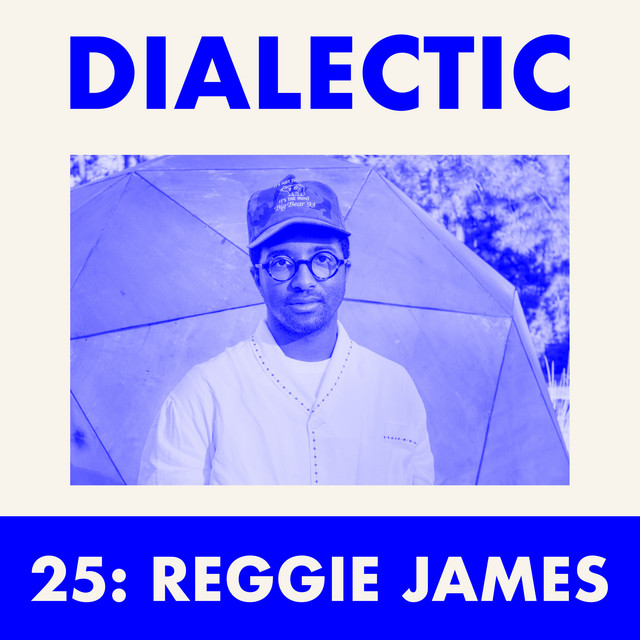
A podcast episode I enjoyed lately -


Until next time.
Warmly,
S